
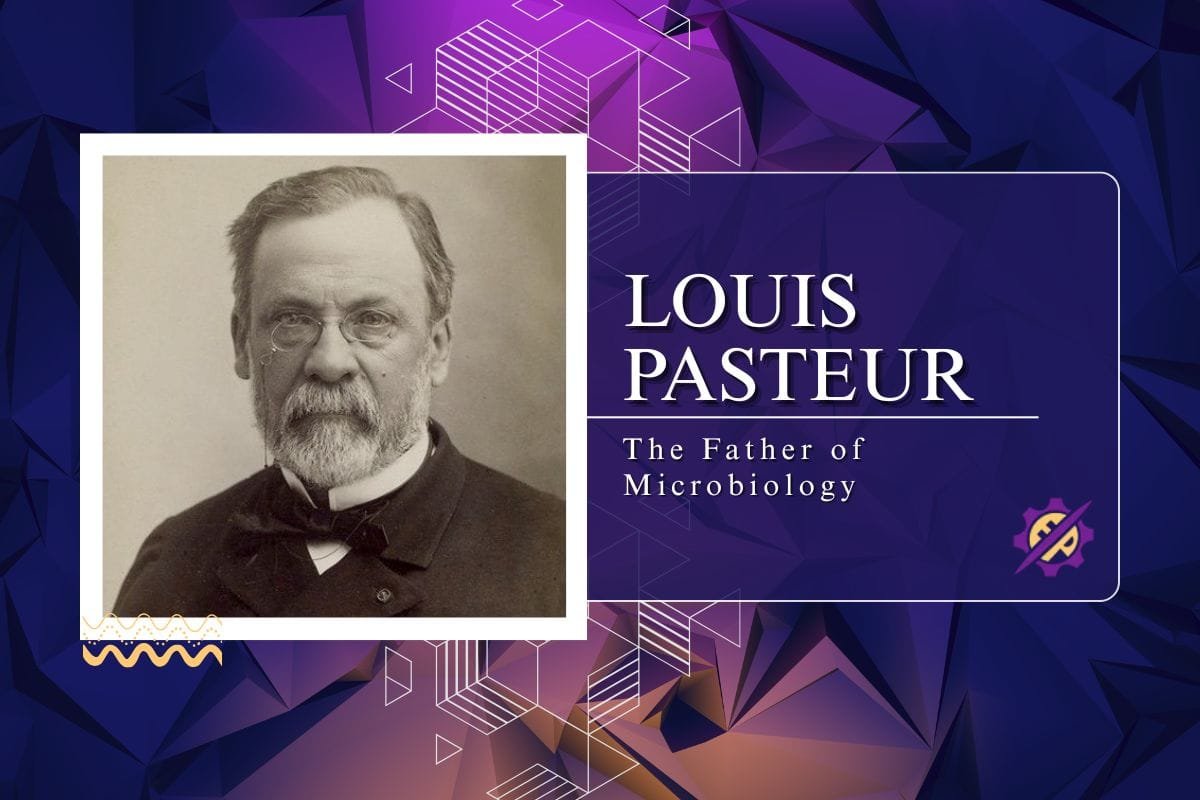
Louis Pasteur stands as one of the most important scientists in history. His research transformed our understanding of disease, food safety, and public health. From germ theory, which changed how we view illness, to vaccines, which have saved millions of lives, Pasteur’s work continues to shape modern medicine in countless ways.
“In the fields of observation, chance favors only the prepared mind.” – Louis Pasteur
Table of Contents
The World Before Germ Theory
In the 19th century, the understanding of disease was very different from what it would become after Louis Pasteur’s discoveries. People believed that sickness came from bad air or that life could appear from non-living matter. This idea was called spontaneous generation. Hospitals were dangerous places where infections spread easily. Surgery often led to death because no one understood the importance of cleanliness.
Pasteur, a chemist by training in France, would go on to disprove these old beliefs through careful experiments and determination.
“Science knows no country, because knowledge belongs to humanity.” – Louis Pasteur
The Germ Theory Revolution
Pasteur’s journey began not with medicine but with wine. French winemakers were losing money because their products kept spoiling, and they asked Pasteur for help. This is where Pasteur’s genius came into play. Through careful observation, he discovered that tiny living organisms were causing the spoilage, not chemical reactions.
Key Breakthroughs:
- Disproving Spontaneous Generation: Using his famous swan-neck flask experiments in 1859, Pasteur proved that microorganisms came from the environment, not thin air. Sterile broth stayed sterile unless it was exposed to outside contamination.
- Pasteurization: Pasteur developed a heating process to kill harmful bacteria in beverages without destroying the taste. This technique still bears his name today and made milk, wine, and beer safe for people around the world.
- Germ Theory of Disease: By connecting microorganisms to illness, Pasteur provided the foundation for modern medicine. Diseases were not random misfortunes — they had causes that could be identified and prevented.
Impact Across Industries
Pasteur’s discoveries had effects across many areas of human life:
| Field | Impact |
| Medicine | Proved that germs cause disease, changing how doctors diagnose and treat patients |
| Surgery | Inspired Joseph Lister’s antiseptic techniques, reducing deaths from infection |
| Food & Beverage | Pasteurization made dairy, wine, and beer safe, saving many lives |
| Agriculture | Identified diseases in silkworms, saving France’s silk industry |
| Public Health | Created the foundation for sanitation and hygiene practices |
The Vaccine Pioneer
Pasteur’s greatest work came in vaccination. Building on Edward Jenner’s earlier smallpox research, Pasteur developed a systematic way to create vaccines using weakened forms of germs. The path was not easy — he faced opposition from scientists who still believed in spontaneous generation, and personal tragedy struck when three of his five children died from typhoid fever. Still, Pasteur pressed on.
Landmark Achievements:
- Chicken Cholera Vaccine (1879): By accident, Pasteur discovered that old, weakened cultures could protect chickens without causing disease. This became the basis for attenuated vaccines.
- Anthrax Vaccine (1881): In a public demonstration at Pouilly-le-Fort, Pasteur vaccinated sheep against anthrax while leaving another group unprotected. The vaccinated sheep survived; the others died. France was amazed by the results.
- Rabies Vaccine (1885): Pasteur’s most famous achievement. When a nine-year-old boy named Joseph Meister was bitten by a rabid dog, Pasteur gave him an experimental vaccine. The boy survived, and Pasteur became known around the world.
“Let me tell you the secret that has led me to my goal. My strength lies solely in my tenacity.” – Louis Pasteur
Partnership with Émile Roux and the Pasteur Institute
Pasteur’s research found strong support in Émile Roux, a physician and microbiologist who became his closest collaborator. Together, they worked on the rabies vaccine and other major projects. Their partnership combined Pasteur’s vision with Roux’s medical expertise.
In 1887, with funding from donations around the world, Pasteur established the Pasteur Institute in Paris. The institute became a global center for research on infectious diseases and remains active today. Scientists there have made important contributions to research on tuberculosis, diphtheria, polio, and HIV.
A Legacy That Lives On
Louis Pasteur died in 1895, but his impact continues to grow. Every glass of pasteurized milk, every vaccination, and every sterile surgery can be traced back to his work. Modern medicine stands on the foundation he built.
“I am on the verge of mysteries and the veil is getting thinner and thinner.” – Louis Pasteur
Pasteur proved that understanding tiny organisms invisible to the eye could save millions of lives. He changed medicine from guesswork into real science.
What’s Next?
As we continue to face new challenges from infectious diseases, how can today’s scientists follow Pasteur’s methods? What future breakthroughs in vaccines and medicine await?
For interesting engineering and science content, follow our Instagram page!

Have any thoughts?
Share your reaction or leave a quick response — we’d love to hear what you think!
-
 0
0 - 0
- 0



